Reverse IP Lookup: Find Domains Hosted on the Same IP Address
Created on 17 September, 2026 • Checker-tools • 36 views • 6 minutes read
A Reverse IP Lookup tool helps you investigate which domain names may be associated with a particular IP address. It can be useful for website administrators, developers, cybersecurity learners, and hosting professionals who want to understand how websites are connected to internet infrastructure.When multiple websites use the same public IP address, a reverse IP lookup may reveal some of the domains associated with that address. However, the results depend on the data sources and methods used by the tool. Not every domain hosted on an IP address will necessarily appear in the results.
Use the Urlshorta Reverse IP Lookup Tool to investigate an IP address and explore the domain information returned by the service.
What Is a Reverse IP Lookup?
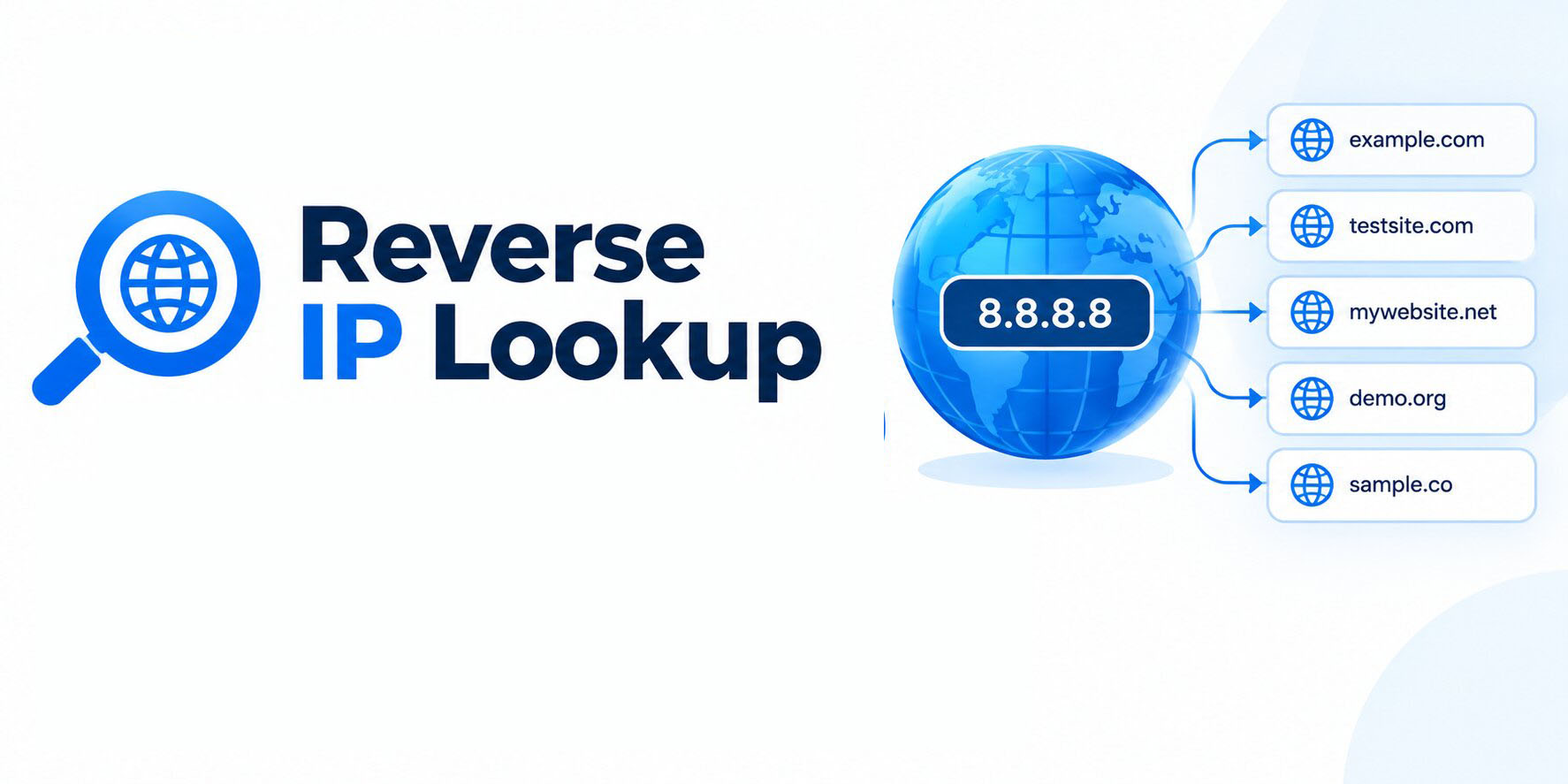
A Reverse IP Lookup is a technique used to identify domain names associated with a particular IP address. It differs from a standard DNS lookup, which typically finds the IP address associated with a domain name.
For example, a standard DNS lookup might help you find the IP address associated with a website. A reverse IP lookup starts with an IP address and searches available records or datasets for domain names associated with it.
The results can help you understand whether an IP address is associated with one website or several websites. However, the result should not be treated as a complete list of every domain using that IP address.
How Does Reverse IP Lookup Work?
Reverse IP lookup services may collect and compare information from different sources, such as DNS observations, historical records, and domain-to-IP datasets. The precise method depends on the service.
Step 1: Enter an IP Address
The process begins with a public IPv4 or IPv6 address, depending on what the tool supports. Make sure the address is entered correctly.
Step 2: Search Available Domain Records
The service checks its available data to identify domain names associated with the submitted IP address. Some services use current observations, while others may also include historical information.
Step 3: Review the Results
The results may include domain names and other information supported by the service. Review the output carefully and note whether the tool provides current or historical data.
Step 4: Investigate Relevant Domains
If you administer a website or are investigating hosting infrastructure, you can use the results as a starting point for further DNS or hosting research. Confirm important findings with additional sources before making technical or security decisions.
How to Use the Reverse IP Lookup Tool
Step 1: Open the Tool
Visit the Reverse IP Lookup page on Urlshorta.
Step 2: Enter the Target IP Address
Enter the public IP address you want to investigate. If you only know a domain name, use a DNS lookup tool first to identify its current IP address.
Step 3: Run the Lookup
Select the available search button and wait for the tool to process the address.
Step 4: Analyze the Returned Domains
If the tool returns domain names, review them and consider whether they are expected to share the same IP address. Remember that the output may be incomplete or outdated.
Step 5: Verify Important Findings
Use additional DNS information or trusted technical resources to confirm details that matter to your work. A reverse IP result alone cannot establish common ownership, a security relationship, or a direct connection between website operators.
Practical Example of Reverse IP Lookup
Suppose a website administrator investigates the documentation-only example address
192.0.2.10. This address belongs to a range reserved for documentation and is not provided here as a real hosting target.In a real investigation, a reverse IP lookup service might return a list of domain names associated with the submitted public IP address in its dataset.
The administrator could then examine whether the domains appear to use shared hosting, a content delivery network, or another hosting arrangement.
The important point is that a returned domain list is evidence of an association in the service's data, not proof that all listed websites belong to the same person or organization.
Common Uses of Reverse IP Lookup
Website Administration
Website owners can investigate the domains associated with their hosting IP address. This may help them understand shared hosting environments and identify unexpected entries that require further investigation.
Hosting Research
Developers and technical researchers can use reverse IP information as one source of evidence when examining how websites are hosted. It can complement DNS lookups, IP information, and hosting provider checks.
Cybersecurity Investigations
Security professionals may use domain-to-IP associations as one step in investigating suspicious infrastructure. However, shared IP addresses are common, so the presence of multiple domains does not automatically indicate malicious activity.
Technical Troubleshooting
When investigating a website or server configuration, reverse IP results may provide useful context about the domains associated with an IP address. The results should be combined with server logs, DNS records, and other relevant evidence.
Reverse IP Lookup vs. Reverse DNS Lookup
These terms sound similar, but they describe different techniques.
Reverse IP Lookup
Reverse IP lookup services search available datasets for domain names associated with an IP address. The results may contain multiple domains and may rely on collected or historical observations.
Reverse DNS Lookup
Reverse DNS lookup queries the DNS system for a PTR record associated with an IP address. A PTR record may identify a hostname, but it does not normally provide a complete list of all domains hosted on the address.
For this reason, reverse DNS lookup and reverse IP lookup should not be treated as interchangeable operations.
Important Limitations of Reverse IP Lookup
Shared Hosting Can Affect Results
Many websites can share a single IP address. This is common with shared hosting and some proxy or CDN arrangements. Domains sharing an IP address are not necessarily related or controlled by the same organization.
Results May Be Incomplete
A service can only return information available through its data sources and lookup methods. Some domains may be missing, especially if the data has not been collected or updated.
Historical Records May Be Outdated
A domain may have used an IP address in the past but moved to a different server later. If historical data is included, check the record's date before assuming the association is current.
CDNs and Reverse Proxies Can Hide Origin Servers
A website may use a content delivery network or reverse proxy. In such cases, the public IP address may belong to the intermediary service rather than the website's origin server. Reverse IP results may therefore reflect the proxy infrastructure.
IP Association Does Not Prove Ownership
Two domains associated with the same IP address are not necessarily owned by the same person or company. Do not use shared IP information alone to make claims about ownership or wrongdoing.
Frequently Asked Questions
What does a Reverse IP Lookup tool do?
It searches available information to identify domain names associated with a specified IP address. The number and accuracy of results depend on the service's data sources.
Can Reverse IP Lookup find every domain on a server?
No. Results may be incomplete or outdated, and some hosting configurations make it difficult to identify every domain associated with an IP address.
Is Reverse IP Lookup the same as Reverse DNS Lookup?
No. Reverse DNS lookup typically queries a PTR record for a hostname. Reverse IP lookup searches datasets for domain names associated with an IP address.
Can I use Reverse IP Lookup for cybersecurity research?
Yes. It can provide useful infrastructure context, but its findings should be verified with other sources and interpreted carefully.
Does sharing an IP address mean websites have the same owner?
No. Many unrelated websites share hosting infrastructure or public IP addresses. Shared IP information does not establish common ownership.
Can Reverse IP Lookup identify a website's hosting provider?
It may provide clues about the infrastructure involved, but it does not always identify the hosting provider reliably. Additional DNS, IP registration, and hosting research may be necessary.
Conclusion
Reverse IP Lookup is a useful technique for investigating domain names associated with a public IP address. It can support website administration, hosting research, troubleshooting, and cybersecurity investigations.
However, results may be incomplete, outdated, or affected by shared hosting and CDN infrastructure. Treat the returned domains as investigative clues rather than definitive evidence of ownership or security status.
Try the Urlshorta Reverse IP Lookup Tool to explore domain associations and support your website research.
Categories
Popular posts
-
What Is a Gravatar Checker?Checker-tools • 90 views
-
-
-
-